
Pablo Gómez
University of Wisconson-Madison
The Corner Society: The Early Atlantic Slave Trade and the Invention of Modern Corporeality
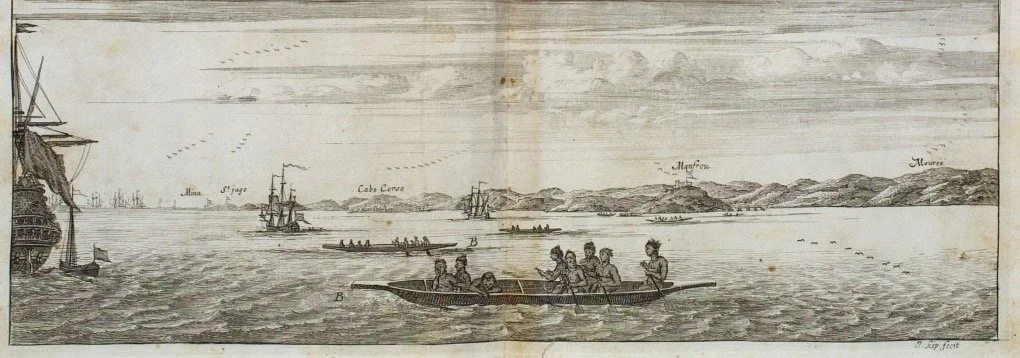
This talk examines how early Atlantic slave trading communities made human corporeality articulable with a new set of ideas about finance, facts, objectivity, and measurable risk that emerged in the early modern era. These communities drew on centuries of legal, commercial, financial, and maritime material customs and ideas. Through their violent procedures, Iberian Atlantic slave trading communities abstracted and assimilated groups of human bodies to numbers. They did so to protect their financial interests rather than caring for enslaved people. The ruthlessness inherent in these practices became ingrained in the modern corporeal mathematics that emerged from the early slave trade and diffused through its vast political, financial, logistical, and intellectual networks. The model for understanding human bodies these communities created foreshadows and shares basic notions with those sustaining the intellectual edifice of disciplines as varied as political arithmetic, economics, population health, demographics, epidemiology, and contemporary biomedicine.
Pablo F. Gómez is Professor of Medical History and History in the Department of Medical History and Bioethics, and the Department of History at the University of Wisconsin, Madison. Gómez is interested in histories of health, the human body, material practices, and knowledge-making about the natural world in the early modern world, with a particular focus on the histories of Latin America, the Caribbean, and the African diaspora. Gómez new book, Bloody Numbers: The Early Atlantic Slave and the Invention of the Modern Corporeality, is forthcoming with the University of Chicago Press (June 2026). The book examines how, through their material practices, Iberian Atlantic slave trading communities made human corporeality articulable with a new set of ideas about finance, facts, objectivity, and measurable risk that emerged in the early modern era. He’s the author of multiple articles, chapters and two other books. His first monograph, The Experiential Caribbean, won the 2019 Welch Medal and the 2018 Albert J. Raboteau Book Prize. He also coedited The Gray Zones of Medicine, a volume that explores the history of health practices in Latin America from the 16th to the 21st century through the biographies of unlicensed healers. The recipient of grants from a variety of US and international institutions, he is currently working on a NEH sponsored project that explores the imagination of new histories of disease, value, bodies, labor, and subjectivity in the Caribbean, as well as the history of materiality in the framing of medical histories in Iberian Atlantic and Mediterranean spaces.